Steel Rate Today in Pakistan
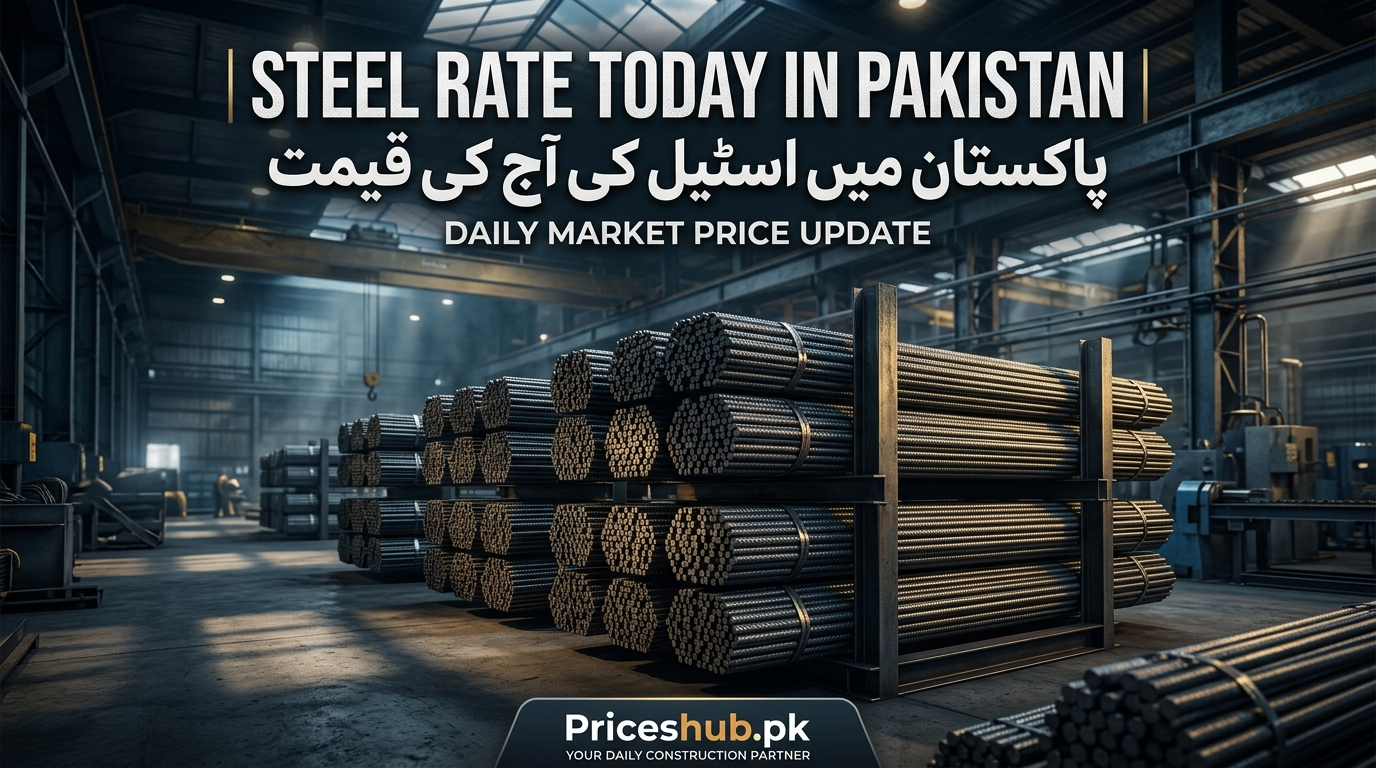
پاکستان کے تعمیراتی شعبے میں اسٹیل (ساریہ / لوہے کی سلاخیں) ضروری ہے، جو بنیادی طور پر مضبوط کنکریٹ کے ڈھانچے اور بلند و بالا عمارتوں کے لیے استعمال ہوتا ہے۔ اہم اقسام گریڈ 40 اور گریڈ 60 ہیں جن میں مغل اسٹیل، امریلی اسٹیلز اور آغا اسٹیل سمیت قابل ذکر برانڈز شامل ہیں۔ 2026 تک، سٹیل کی قیمتیں روپے سے لے کر ہوتی ہیں۔ 255 سے روپے 270 فی کلو گرام، گریڈ 40 کے ساتھ روپے 255-265 فی کلو گرام اور گریڈ 60 روپے۔ 260-270 فی کلو۔ مقامی اسٹیل کے لیے قیمتیں عام طور پر کم ہوتی ہیں اور پریمیم برانڈز کے لیے زیادہ ہوتی ہیں، شہر اور مارکیٹ کے عوامل پر منحصر تغیرات کے ساتھ۔
Steel Manufacturing Companies In Pakistan
Various Steel iron rod manufacturing mills are working in different cities of Pakistan.
- Pakistan Steel Mills
- Five Star Steel
- Amreli Steels
- F.F. Steels
- Mughal Steel
- Safa Steel
- Agha Steel
- Ittefaq Steel
- Ittehad Steel
- A.F. Steel
- Chenab Steel
- Maqsood Steel
- Amaan Steels
Five-Star Steel Rate Today
Five Star Steel is a steel brand based in Pakistan, known for producing Grade 40 and Grade 60 products. These products are characterized by their durability and strength, making them a long-term investment.
| Five-Star Steel Iron Rod
Size in Sutar/mm |
Five-Star steel 40 Grade Rate in KG | Five-Star Steel 40 Grade Rate in Metric Ton | Five-Star steel 60 Grade Rate in KG | Five-Star steel 60 Grade Rate in Metric Ton |
| 3 sutar / 10mm | RS. 240 Per KG | RS. 240,000 Per Metric Ton | RS. 242 Per KG | RS. 242,000 Per Metric Ton |
| 4 sutar / 12mm | RS. 238 Per KG | RS. 238,000 Per Metric Ton | RS. 240 Per KG | RS. 240,000 Per Metric Ton |
| 5 sutar / 16mm | RS. 238 Per KG | RS. 238,000 Per Metric Ton | RS. 240 Per KG | RS. 240,000 Per Metric Ton |
| 6 sutar / 20mm | RS. 238 Per KG | RS. 238,000 Per Metric Ton | RS. 240 Per KG | RS. 240,000 Per Metric Ton |
| 7 sutar / 22mm | RS. 238 Per KG | RS. 238,000 Per Metric Ton | RS. 240 Per KG | RS. 240,000 Per Metric Ton |
| 8 sutar / 25mm | RS. 238 Per KG | RS. 238,000 Per Metric Ton | RS. 240 Per KG | RS. 240,000 Per Metric Ton |
Factors Affecting On Steel Rate in Pakistan
Steel prices in Pakistan are variable and fluctuate often due to various market factors. Some of the primary influencers include:
- Costs of Raw Materials: The main raw materials, imported scrap and iron ore, have their prices on the international market that directly affect local steel rates.
- Energy & Fuel Costs: The production of steel is very energy-intensive, so any variations in the prices of gas, coal, and electricity significantly impact costs.
- Exchange Rate Fluctuations: Given that Pakistan imports a substantial amount of raw materials, any decline in the value of the rupee against the dollar boosts overall expenses.
- Logistics & Transportation: Shipping costs and fuel prices affect the final retail price of steel.
- Government Levies & Taxes: Import tariffs, sales tax, and federal excise duty play a role in determining steel prices.
- Construction Demand Trends: Increased demand during peak construction periods (such as summer and after monsoon) typically drives prices higher.
- Global Market Influences: Factors such as international demand, shipping expenses, and fluctuations in commodity prices also impact local steel pricing.
Branded Steel Price Today
| Brand Name | 40 Grade Rate in KG | 40 Grade Rate in Metric Ton | 60 Grade Rate in KG | 60 Grade Rate in Metric Ton |
| Five Star Steel | RS. 240 Per KG | RS. 240,000 Per Metric Ton | RS. 242 Per
KG |
RS. 242,000 Per Metric Ton |
| Amreli Steels | RS. 238 Per KG | RS. 238,000 Per Metric Ton | RS. 240 Per
KG |
RS. 240,000 Per Metric Ton |
| Mughal Steel | RS. 239 Per KG | RS. 239,000 Per Metric Ton | RS. 241 Per KG | RS. 241,,000 Per Metric Ton |
| Agha Steel | RS. 235 Per KG | RS. 235,000 Per Metric Ton | RS. 237 Per KG | RS. 237,000 Per Metric Ton |
| AF Steel | RS. 235 Per KG | RS. 235,000 Per Metric Ton | RS. 237 Per KG | RS. 237,000 Per Metric Ton |
| Moiz Steel | RS. 232 Per KG | RS. 232,000 Per Metric Ton | RS. 234 Per KG | RS. 234,000 Per Metric Ton |
| Union Steel | RS. 230,Per KG | RS. 230,000Per Metric Ton | RS. 232 Per KG | RS. 232,000 Per Metric Ton |
| Naveena Steel | RS. 231 Per KG | RS. 231,000 Per Metric Ton | RS. 233 Per KG | RS. 233,000 Per Metric Ton |
Consumption Of Steel In Pakistan
- Demand in the Construction Sector: The main factors driving steel usage include housing developments, commercial complexes, bridges, and major infrastructure projects.
- Annual Steel Usage: Pakistan’s annual steel consumption ranges from 7 to 8 million tons, with an upward trend each year.
- Steel Consumption Per Capita: The current steel consumption per capita is approximately 40–45 kg, which is significantly lower than the global average, indicating room for growth.
- Government Initiatives & CPEC Developments: Large-scale initiatives such as dams, highways, power stations, and industrial parks under CPEC greatly increase the steel demand.
- Utilization in Industry & Manufacturing: Besides construction, steel is extensively utilized in sectors like automotive, machinery, shipbuilding, and various other industries.
- Urban Expansion & Population Increase: The swift urban growth in cities such as Karachi, Lahore, and Islamabad continues to drive up steel consumption.
Steel Rate in Different Cities
| City-Wise Local Steel | Rate per KG | Rate per Metric Ton |
| Karachi | RS. 218 Per KG | RS. 218,000 Per Metric Ton |
| Lahore | RS. 216 Per KG | RS. 216,000 Per Metric Ton |
| Islamabad | RS. 214 Per KG | RS. 214,000 Per Metric Ton |
| Faisalabad | RS. 212 Per KG | RS. 212,000 Per Metric Ton |
| Peshawar | RS. 214 Per KG | RS. 214,000 Per Metric Ton |
| Gujranwala | RS. 212 Per KG | RS. 212,000 Per Metric Ton |
| Quetta | RS. 216 Per KG | RS. 216,000 Per Metric Ton |
| Multan | RS. 212 Per KG | RS. 212,000 Per Metric Ton |
Regional Variations in Steel Prices
- Punjab (Lahore, Faisalabad, Rawalpindi, Multan) – Prices tend to remain stable due to the proximity of major steel mills.
- Sindh (Karachi, Hyderabad, Sukkur) – Prices may be somewhat elevated because of transportation and port-related expenses.
- KPK & Balochistan (Peshawar, Quetta) – Prices are generally higher than in Punjab due to longer supply chains and a limited number of local mills.
Conclusion
Steel serves as the foundation of Pakistan’s growth in construction and industry. Currently, prices range from Rs. 265,000 to Rs. 280,000 per ton (equivalent to Rs. 10,600 to Rs. 11,200 per 40kg bundle), with variations depending on brands, grades, and locations. Changes in prices are influenced by factors like the importation of raw materials, energy expenses, currency fluctuations, and seasonal demand. Given the ongoing mega projects, CPEC developments, and swift urbanization, the steel demand is anticipated to increase further, establishing it as a crucial indicator of Pakistan’s economic advancement.
سٹیل تعمیرات اور صنعت میں پاکستان کی ترقی کی بنیاد کا کام کرتا ہے۔ فی الحال، قیمتیں روپے سے لے کر ہیں۔ 265,000 سے روپے 280,000 فی ٹن (10,600 روپے سے 11,200 روپے فی 40 کلوگرام بنڈل کے برابر)، برانڈز، گریڈز اور مقامات کے لحاظ سے تغیرات کے ساتھ۔ قیمتوں میں تبدیلی خام مال کی درآمد، توانائی کے اخراجات، کرنسی کے اتار چڑھاؤ اور موسمی طلب جیسے عوامل سے متاثر ہوتی ہے۔ جاری میگا پراجیکٹس، CPEC کی پیشرفت، اور تیزی سے شہری کاری کے پیش نظر، اسٹیل کی طلب میں مزید اضافہ متوقع ہے، جو اسے پاکستان کی اقتصادی ترقی کے ایک اہم اشارے کے طور پر قائم کرتا ہے۔
FAQ’s
What is the current steel price in Pakistan?
The current average steel price ranges from Rs. 265,000 to Rs. 280,000 per ton, varying by brand and region.
Which steel brands are most popular in Pakistan?
Top brands include Amreli Steel, Mughal Steel, Ittehad Steel, Agha Steel, and Five Star Steel, all known for their durability and strength.
How much steel does Pakistan consume annually?
Pakistan consumes approximately 7 to 8 million tons of steel annually, with a per capita usage of 40 to 45 kilograms, which is below the global average.