Pakistan Army Rescues Thousands from Flood-Affected Areas
Pakistan Army swung rescue troops, engineers, helicopters, and medical teams to all the worst-hit areas in immediate rescue operations. Major rescue cities include Swat, Buner, Shangla, Bajaur, Dir, and Chitral in KP; Astore, Hunza, and Skardu in GB; Layyah, Rajanpur, and Dera Ghazi Khan in Punjab; Karachi, Thatta, Badin, and Sukkur in Sindh. The operations include evacuation on a large scale, along with medical assistance and food distribution, plus restoration of infrastructure, which again brings out the major role of the Army in saving lives during such a national emergency, besides helping the community. More than 25,000 people have been evacuated, while about 6,903 rescued people have been treated in nine dedicated medical camps only in KP.
Know more about: Flood and Rain Crisis in Pakistan 2025
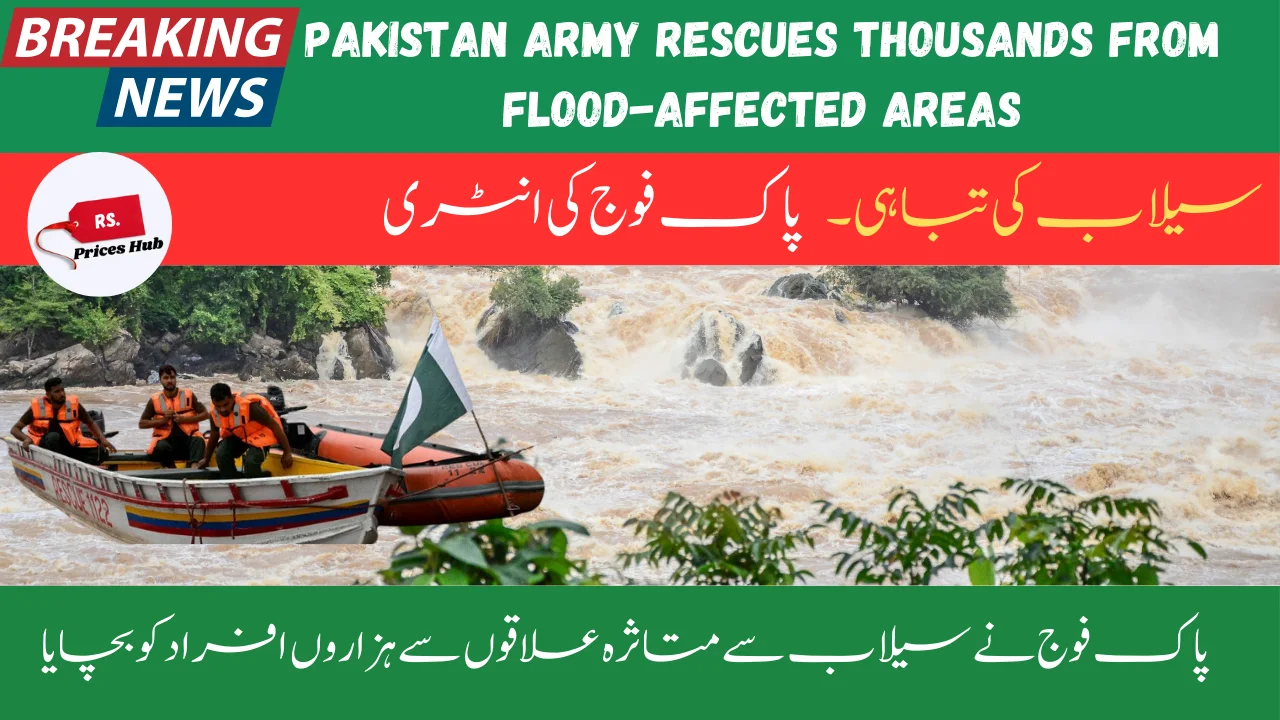
پاک فوج نے فوری امدادی کارروائیوں میں ریسکیو دستوں، انجینئرز، ہیلی کاپٹرز اور طبی ٹیموں کو سب سے زیادہ متاثرہ علاقوں میں بھیج دیا۔ بڑے ریسکیو شہروں میں سوات، بونیر، شانگلہ، باجوڑ، دیر اور کے پی میں چترال شامل ہیں۔ جی بی میں استور، ہنزہ اور سکردو؛ پنجاب میں لیہ، راجن پور، اور ڈیرہ غازی خان؛ سندھ میں کراچی، ٹھٹھہ، بدین اور سکھر۔ ان کارروائیوں میں بڑے پیمانے پر انخلاء، طبی امداد اور خوراک کی تقسیم کے ساتھ ساتھ بنیادی ڈھانچے کی بحالی شامل ہے، جو کہ کمیونٹی کی مدد کرنے کے علاوہ ایسی قومی ہنگامی صورتحال کے دوران جانیں بچانے میں فوج کے اہم کردار کو دوبارہ سامنے لاتا ہے۔ 25,000 سے زیادہ لوگوں کو نکالا جا چکا ہے، جب کہ تقریباً 6,903 لوگوں کو بچایا گیا ہے جن کا صرف کے پی میں نو مخصوص میڈیکل کیمپوں میں علاج کیا گیا ہے۔
Current Flood Situation in Pakistan
- By August 25, 2025, 785 deaths and 1,011 people wounded across the nation since June 26 had been reported to the National Disaster Management Authority, with the damage or destruction of 4,735 houses and a loss of 5,450 livestock.
- The KP province continues to be the highest contributor with 469 deaths and 280 injuries.
- Punjab comes next with 165 deaths and 584 injuries, Sindh, 51 deaths and 69 injuries;
- Balochistan, 24 deaths and 5 injuries;.
- Gilgit-Baltistan, 45 deaths and 42 injuries; Azad Jammu & Kashmir, 23 deaths and 28 injuries;
- Islamabad with 8 deaths and 3 injuries.
Areas Under Pakistan Army Relief Operations
Khyber Pakhtunkhwa:
- Two in Buner, and two in Shangla, one in Swat.
- FC wings at Bajaur and Dir, plus a company at Swabi.
- That makes up engineering troops as one engineer brigade, two engineer battalions, and two Urban Search & Rescue teams with their special equipment.
- Medical support comprises three military medical units for KP and, for both regions together, nine medical camps in GB.
Gilgit-Baltistan:
- Two engineer battalions are employed in the clearance of roads and removal of landslides.
- Nine medical camps were set up to provide immediate healthcare.
Rescue and Evacuation Operations
Mass Evacuations
As of mid-August, 25,000 people have been safely shifted to a safe location.
Army’s Rescue Impact
Direct rescue of 6,903 persons by the military is accompanied by the treatment of more than 6,304 persons in medical camps. Army aviation forms part and parcel of the evacuations being carried out from remote as well as submerged areas.
Aerial Support & Helicopter Missions
Helicopters have been pressed into service for the performance of essential relief operations- victim airlifts, ration airdropping as well as pick and drop of survivors from inaccessible spots in the mountainous areas of KP.
Aid Distribution to Evacuation Points
Ready-to-eat meals and massive rations have also been positioned by the Army alongside rescues.
- In Peshawar, there are 2,500 meals and 20 tonnes of rations.
- In Nowshera, there are 5,000 meals and 505 tonnes of rations being delivered by road as well as by helicopter to evacuation sites.
Distribution of Food and Essential Supplies
Rations & Meals Distribution
- Hundreds of thousands of meals and ration packs. Specifically, it is about 1,685 tonnes three-day ration and 25,000 Meal Ready-to-Eat packs that the Army has delivered to populations who have become victims.
- Rations were collected at relief collection points spread across the country, amounting to 2,294 tonnes, together with 277 tonnes of other essentials such as hygiene kits, kitchen sets, among others, which were distributed, plus more than 770,000 medicines.
Airlift and Airbridge Efforts
- The Pakistan Air Force (PAF) laid down a most vital air bridge through the lift of 48 tonnes of dry rations and relief goods from Karachi to Peshawar, specially meant for Buner and Shangla.
- 276 helicopter sorties have so far been carried out by the Army in the delivery of such emergency supplies to remote and inaccessible areas under most challenging conditions.
Local-Level Support and Community Relief
- At Tank’s Union Council Pai, the Pakistan Army distributed more than 5,000 kg of flour to flood-affected families (about 715 bags), assisted by FC South.
- In Shangla district, those remote villages affected by the flood – Rajsham is one among them – received ration packs and relief packages along with medical camps with Army support and NGO Ayesha Foundation.
Conclusion
Recent floods once again tested and saw the resilience and unity of the entire nation. Despite massive destruction, the Pakistan Army swung into concerted action, large rescue operations, and distribution of necessary supplies with medical relief to minimize human suffering. Rescue teams airlifted rations, restored damaged infrastructure like roads and bridges, and set up medical camps in remote areas, providing timely assistance to thousands of people stranded in various regions affected by calamities. big scale of destruction puts forward an immediate requirement for long-term solutions in terms of better flood management systems, having resilient infrastructure, besides community preparedness.
حالیہ سیلاب نے ایک بار پھر پوری قوم کی لچک اور اتحاد کو آزمایا اور دیکھا۔ بڑے پیمانے پر تباہی کے باوجود، پاکستانی فوج نے ٹھوس کارروائی، بڑے ریسکیو آپریشنز، اور طبی امداد کے ساتھ ضروری سامان کی تقسیم میں مدد کی تاکہ انسانی تکلیف کو کم کیا جا سکے۔ ان کوششوں میں جن میں ایئر لفٹنگ راشن، انفراسٹرکچر کو نقصان پہنچا جیسے سڑکوں، پلوں کی بحالی، اور دور دراز کے علاقوں میں میڈیکل کیمپس کی فراہمی شامل تھی، مختلف حصوں میں پھنسے ہوئے ہزاروں لوگوں کی بروقت امداد کو یقینی بنایا گیا جو آفات کا شکار ہو چکے ہیں۔ لیکن بدقسمتی سے، تباہی کے اتنے بڑے پیمانے پر کمیونٹی کی تیاری کے علاوہ سیلاب سے نمٹنے کے بہتر نظام، لچکدار انفراسٹرکچر کے لحاظ سے طویل مدتی حل کی فوری ضرورت پیش آتی ہے۔
FAQ’s
Which areas were most affected by the recent floods in Pakistan?
Swat, Buner, Shangla, Bajaur, Chitral, Gilgit-Baltistan, Skardu, Astore, parts of Punjab, Layyah, Dera Ghazi Khan, and Sindh, Sukkur, Khairpur, Dadu.
How many people have been rescued by the Pakistan Army so far?
The army rescued thousands of people from the ground and by helicopter and safely transferred them to safe areas.
What kind of relief operations is the Army conducting?
The Pakistan army set up medical camps, distributing food, essential supplies, and restoring damaged infrastructure.