Floods Damage 1.3 Mln Acres Of Crops In Punjab
On September 17, 2025, widespread floods in Punjab Province caused extensive damage to agriculture, affecting 1.329 million acres of farmland, or 6.3% of the total cropped area. Major crops impacted included rice (654,000 acres submerged), fodder (334,000 acres), maize (92,000 acres), sesame (60,000 acres), sugarcane (106,000 acres), and cotton (55,000 acres), with vegetables experiencing the highest proportional damage at 25.8%. The floods are described as one of the worst agricultural disasters in recent years, significantly threatening food security and the rural economy. Government agencies are working to restore the damaged land and ensure food safety in the aftermath.
Know more about: Pakistan 2025 Floods: Damage and Relief Efforts
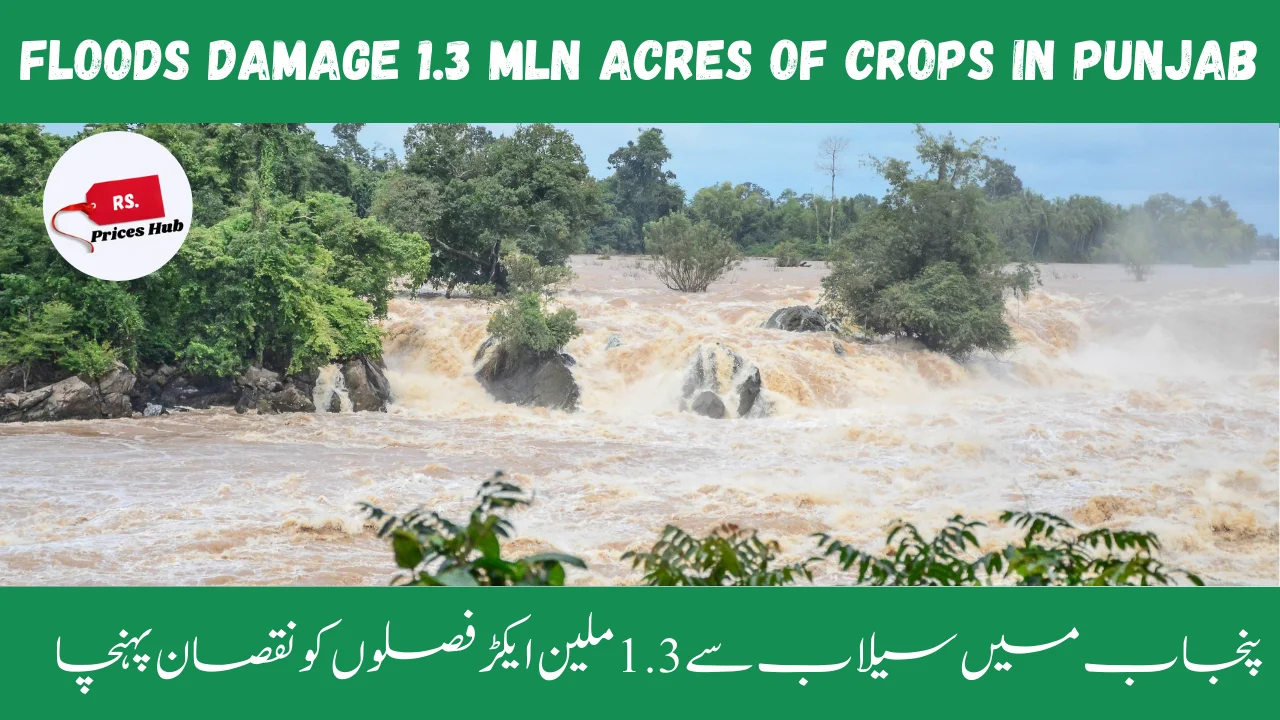
17 ستمبر 2025 کو صوبہ پنجاب میں بڑے پیمانے پر آنے والے سیلاب نے زراعت کو بڑے پیمانے پر نقصان پہنچایا، جس سے 1.329 ملین ایکڑ کھیتی یا کل فصل کا 6.3 فیصد رقبہ متاثر ہوا۔ متاثر ہونے والی بڑی فصلوں میں چاول (654,000 ایکڑ رقبہ زیر آب)، چارہ (334,000 ایکڑ)، مکئی (92,000 ایکڑ)، تل (60,000 ایکڑ)، گنا (106,000 ایکڑ) اور کپاس (55,000 ایکڑ) شامل ہیں، جس میں سبزیوں کی پیداوار میں سب سے زیادہ نقصان ہوا ہے۔ سیلاب کو حالیہ برسوں کی بدترین زرعی آفات میں سے ایک کے طور پر بیان کیا گیا ہے، جس سے غذائی تحفظ اور دیہی معیشت کو نمایاں طور پر خطرہ لاحق ہے۔ سرکاری ادارے تباہ شدہ زمین کو بحال کرنے اور اس کے نتیجے میں خوراک کی حفاظت کو یقینی بنانے کے لیے کام کر رہے ہیں۔
Extent of the Damage
Affected land: More than 1.3 million acres of agricultural land are underwater across Punjab.
Divisional breakdown:
- Faisalabad: Approximately 300,000 acres have been devastated.
- Gujrat and Gujranwala combined: About 200,000 acres are affected.
- Bahawalpur: Roughly 130,000 acres have sustained damage.
- Sahiwal: Around 145,000 acres are impacted.
- Lahore Division: Nearly 99,000 acres are submerged.
Crops and Losses
Rice (paddy) has suffered the most significant damage, with losses estimated at up to 60%. Cotton has experienced losses of approximately 35%. The damage to sugarcane amounts to around 30% of the existing crop. Other crops, including maize and various vegetables, have also been impacted, although specific percentages are not yet completely known.
Broader Impacts
- Food security concern: There is increasing worry that Punjab may fail to achieve its agricultural production goals due to significant crop losses. Key staple crops like rice and wheat could become scarce, leading to higher prices.
- Economic damages: The agricultural sector has suffered damages exceeding USD 1 billion (or its equivalent in Pakistani rupees), resulting from lost crops, inputs (such as seeds and fertilizer), and other losses.
- Impact on livelihoods and displacement: Numerous farmers are grappling with crop failures as well as the destruction of infrastructure, loss of livestock, damage to irrigation systems, and displacement. Rural communities close to riverbanks and within floodplain areas have been hit particularly hard.
- Risk to downstream areas: The water flowing from Punjab is currently threatening the agricultural land in Sindh province.
Government & Institutional Response
Farmer groups and trade bodies in Pakistan are calling for an “agricultural emergency,” seeking financial aid, loans, and the import of staple foods. Officials have ordered compensation for affected farmers, and the Chief Minister of Punjab has directed the assessment of losses. Proposed measures include repairing infrastructure, clearing silt, enforcing riverbank laws, and improving early warning systems.
Root Causes & Underlying Issues
- Heavy monsoon showers have raised river levels to alarming heights.
- Water discharged from both local and neighboring dams has added to the overall volume.
- Encroachment on floodplains, vulnerable embankments, and inadequate drainage worsen the impact of flooding in several regions.
Action Plan for Flood Recovery in Punjab’s Agriculture
Immediate Relief & Support
- Rapid compensation for farmers’ losses.
- Offer low-interest or interest-free loans for recovery.
- Supply quality seeds and fertilizers at subsidized rates.
Stabilize Food Supply & Prices
- Consider importing staple cereals if needed.
- Monitor food markets to prevent hoarding and regulate prices.
Infrastructure & Flood Management
- Repair and reinforce drainage and flood control systems.
- Clear silt to restore soil fertility.
- Enforce laws against illegal encroachments.
Climate Resilience & Long-Term Planning
- Build reservoirs and improve water regulation.
- Enhance early warning systems and forecasting.
- Promote flood-resistant crops and adjust planting schedules.
Administrative & Policy Measures
- Declare an agricultural emergency for special funding.
- Foster coordination among various government levels.
- Involve farmers in recovery planning.
Conclusion
The floods in Punjab have resulted in catastrophic devastation, destroying more than 1.3 million acres of farmland and greatly affecting farmers’ livelihoods. With essential crops such as rice, cotton, and sugarcane suffering extensive damage, this disaster threatens food security and the rural economy directly. It is crucial to implement immediate relief measures along with long-term strategies for resilience to protect farmers, stabilize food supplies, and avert similar large-scale losses in the future. Effective government intervention, support for farmers, and policies that adapt to climate change will be vital in the agricultural recovery of Punjab.
پنجاب میں سیلاب نے تباہ کن تباہی مچائی ہے، جس سے 1.3 ملین ایکڑ سے زائد کھیتی باڑی تباہ ہوئی ہے اور کسانوں کی روزی روٹی بہت متاثر ہوئی ہے۔ چاول، کپاس، اور گنے جیسی ضروری فصلوں کو بڑے پیمانے پر نقصان پہنچانے کے ساتھ، اس آفت سے خوراک کی سلامتی اور دیہی معیشت کو براہ راست خطرہ ہے۔ کسانوں کی حفاظت، خوراک کی فراہمی کو مستحکم کرنے اور مستقبل میں اسی طرح کے بڑے پیمانے پر ہونے والے نقصانات کو روکنے کے لیے لچک کے لیے طویل مدتی حکمت عملیوں کے ساتھ فوری امدادی اقدامات کو نافذ کرنا بہت ضروری ہے۔ مؤثر حکومتی مداخلت، کسانوں کے لیے معاونت، اور موسمیاتی تبدیلیوں سے مطابقت رکھنے والی پالیسیاں پنجاب کی زرعی بحالی میں اہم ہوں گی۔
FAQ’s
Which crops were most affected by the floods in Punjab?
Rice experienced the most significant damage, affecting 654,000 acres. Fodder, sugarcane, cotton, and vegetables suffered losses afterward.
How much agricultural land was damaged in total?
What steps is the government taking for recovery?
Authorities are offering compensation, planning to supply subsidized seeds and fertilizers, and are considering declaring an agricultural emergency to support farmers.