Urea Fertilizer Price in Pakistan
Urea Fertilizer is the main element of agriculture in Pakistan because it becomes the most preferred nitrogen source for the fertilizer of wheat, rice, and sugarcane crops. A 50 kg bag of urea will fetch on average between Rs 4,300 to Rs 4,600 in 2025, depending on its brand plus region. Presently, the farmers are bearing high input costs due to increased gas tariffs and production costs, as well as supply shortages. Here is an article about the recent prices of urea fertilizer in Pakistan, which caused such changes, and how they have affected the farming community.
Read Also: Latest Fertilizer Prices in Pakistan

یوریا کھاد پاکستان میں زراعت کا بنیادی عنصر ہے کیونکہ یہ گندم، چاول اور گنے کی فصلوں کی کھاد کے لیے نائٹروجن کا سب سے پسندیدہ ذریعہ بن جاتا ہے۔ 2025 میں یوریا کا 50 کلو کا تھیلا اوسطاً 4,300 سے 4,600 روپے کے درمیان حاصل کرے گا، اس کے برانڈ پلس ریجن کے لحاظ سے۔ اس وقت، کسانوں کو گیس کے نرخوں میں اضافے اور پیداواری لاگت کے ساتھ ساتھ سپلائی کی کمی کی وجہ سے زیادہ لاگت برداشت کرنی پڑ رہی ہے۔ یہاں پاکستان میں یوریا کھاد کی حالیہ قیمتوں کے بارے میں ایک مضمون ہے، جس کی وجہ سے اس طرح کی تبدیلیاں ہوئیں، اور ان کا کسان برادری پر کیا اثر پڑا ہے۔
Current Price Overview
| Brand / Type | Price Range | Notes |
| Standard Urea (major brands) | 4,300 to 4,600 | Typical retail range. |
| Neem-Coated Urea | 4,600 to 5,000 | Slight premium for treated form. |
| Higher Brand / Granular Variants | 4,500 to 5,250+ | Top-end brands show higher prices. |
Key Factors Affecting Urea Prices in Pakistan
- Natural Gas Prices: The cost of urea production has increased due to higher gas tariffs in Pakistan, rising from Rs 580/mmbtu to Rs 1,597/mmbtu.
- Global Market Influences: International urea and ammonia prices, along with global demand-supply dynamics and export restrictions, impact local pricing.
- Government Policies: Government subsidies on gas and regulatory actions affect manufacturers’ pricing strategies.
- Currency and Import Costs: A weak Pakistani rupee against the dollar and high international freight costs raise retail prices for imported materials.
- Seasonal Demand: Prices tend to spike during major cropping seasons (Rabi and Kharif), and supply chain disruptions can contribute to price increases.
- Market Competition: The level of competition and pricing practices among larger industry players influences how cost increases are transferred to farmers.
Types of Urea Fertilizer
| Type | Uses |
| Prilled Urea | Quick-dissolving; good for general application in many soils. |
| Granular Urea | Field applications where durability, storage, and mixture with other fertilizers matter. |
| Liquid Urea / Urea Solutions (e.g., UAN) | Precision applications, fertigation, when fast nitrogen uptake is needed. |
| Coated or Controlled‐Release Urea | For long-season crops, soils with volatilization/leaching risk, better nitrogen use efficiency. |
| Standard Fertilizer-Grade Urea (46-0-0) | General-purpose nitrogen fertilizer for many crops. |
| Other Specialized / Industrial Grades | Non-agricultural uses such as chemicals, emissions reduction, and animal feed. |
Regional Variations & Brand Differences in Urea Prices
- Though industry reports suggest there are no major price differences across provinces, slight variations exist because of transportation costs, dealer margins, and local distribution.
- As one report noted: “prices of Urea fertilizer … didn’t differ substantially across players despite huge differences in feed-gas price paid by different plants.”
- In the more remote area or province where logistics are tougher, the end retail cost can be slightly higher.
| Brand / Variant | Typical Price Range (50 kg bag) | Notes |
| Sona Urea | Rs 4,300 – 4,600 | Widely available, standard local brand. |
| Engro Urea | Rs 4,350 – 4,550 | Another major brand with similar pricing. |
| Zabardast Urea | Rs 5,200 – 5,500 or more | Premium variant; higher cost. |
| Other brands/imports | Rs 4,400 – 4,650 | Slightly variable depending on origin and brand. |
Impact on Farmers & Agriculture Sector
- High input costs are raised by the continuous increases in prices of urea fertilizer from about Rs 2,500 a few years back to over Rs 4,500 in 2025. Smallholders cannot afford the quantity of fertilizer that they need; hence, its application is reduced.
- Because of high prices, farmers will not apply as much urea. Some farmers just reduce the application. Hence, low yields are attained, and soil fertility problems are especially from the major crops of wheat, rice, and maize.
- High input costs without a corresponding increase in the price of crops squeeze the profit margin of farmers, thereby discouraging them from investing in better seeds or any other technologies.
- The lesser use of fertilizer directly translates into the output of crops at the national level, which creates risks for food shortages and higher market prices for common commodities.
- Farmer associations and unions want the government to control prices, give gas subsidies, and share fair distribution policies so that the fertilizer market will be stabilized and it will reach all places.
Benefits of Urea Fertilizer
- High Nitrogen Fertilizer (46%), Urea has the highest concentration of nitrogen among all solid fertilizers. It is very efficient in improving plant growth and yields.
- Low Cost and Easily Available, Urea is cheaper than any other nitrogen source and easily found in the local markets of Pakistan.
- Fast Nutrient Supplier, if applied correctly, it dissolves quickly, thus supplying nitrogen fast, which helps in healthy vegetative growth.
- Wheat, rice, maize, cotton, sugarcane, and vegetables. From different soil types, it adapts well.
Read Also: Rice(Dhaan) Price in Pakistan – پاکستان میں چاول کی قیمت
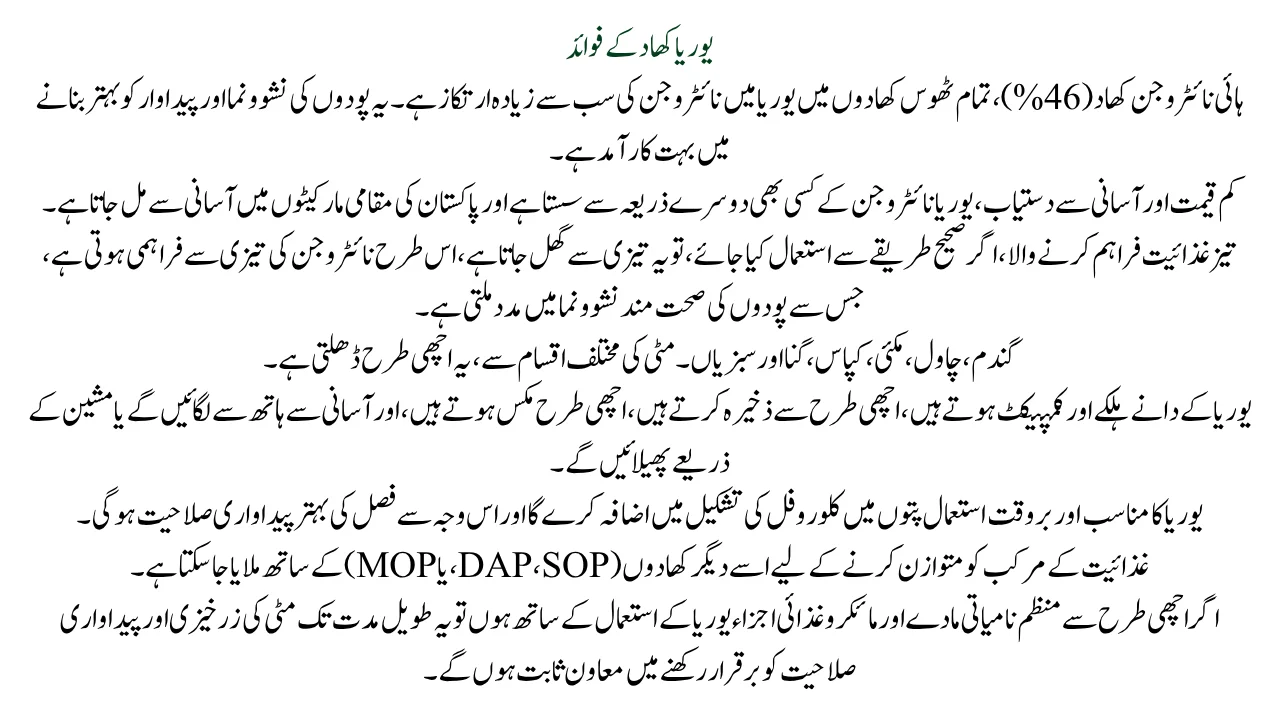
- Granules of Urea are light and compact, will store well, mix well, and apply easily by hand or spread by machine.
- Proper and timely application of Urea will enhance the formation of chlorophyll in leaves and hence better crop productivity.
- It can be mixed with other fertilizers (DAP, SOP, or MOP) to balance nutrient mixtures.
- If well-managed organic matter and micronutrients accompany the application of urea, it will assist in sustaining the fertility and productivity of soils over the long term.
Conclusion
Urea stands as the mainstay of Pakistan’s agriculture because it is the cheapest among all high-nitrogen fertilizers and very effective in promoting vigorous crop growth. Even after recent hikes in its price, with 50 kg bags now selling at an average price between Rs 4,300 and Rs 4,600, farmers still want to use this input for all major crops. Its efficient and balanced application is obligatory to prevent nutrient loss and soil degradation. Government support on price stabilization and supply continuity shall serve productivity sustainability as well as farmer protection.
یوریا پاکستان کی زراعت کی بنیادی بنیاد کے طور پر کھڑا ہے کیونکہ یہ تمام ہائی نائٹروجن کھادوں میں سب سے سستا ہے اور فصل کی مضبوط نشوونما کو فروغ دینے میں بہت موثر ہے۔ اس کی قیمت میں حالیہ اضافے کے بعد بھی، 50 کلو کے تھیلے اب اوسطاً 4,300 روپے اور 4,600 روپے کے درمیان فروخت ہو رہے ہیں، کسان اب بھی تمام بڑی فصلوں کے لیے اس ان پٹ کو استعمال کرنا چاہتے ہیں۔ اس کا موثر اور متوازن استعمال غذائی اجزاء کے نقصان اور مٹی کے انحطاط کو روکنے کے لیے واجب ہے۔ قیمتوں کے استحکام اور سپلائی کے تسلسل پر حکومت کی مدد سے پیداواری استحکام کے ساتھ ساتھ کسانوں کے تحفظ کا بھی فائدہ ہوگا۔
FAQ’s
What is the current price of a 50 kg bag of urea fertilizer in Pakistan?
The cost of a 50 kg bag of urea varies from Rs 4,300 to Rs 4,600, based on the brand and location.
Why have urea fertilizer prices increased in 2025?
Prices have increased due to higher gas tariffs, global market fluctuations, currency depreciation, and supply shortages impacting production and distribution.
How are rising urea prices affecting farmers?
Higher prices are raising input costs for farmers, leading them to use less fertilizer. This results in lower yields and reduced profits.